Industrial Uses Issue Brief
U.S. Soy: Leading the Charge Toward a Sustainable Future
Explore the Innovative and Eco-Friendly Applications of Soybeans
For decades, the Soy Checkoff has been at the forefront of soybean innovation, driving research and development to unlock the full potential of this remarkable crop. Beyond its vital role in food and animal feed, U.S. Soy is transforming industries with sustainable, versatile and high-performing applications — many of which also support human health by replacing harmful substances such as PFAS, phthalates and formaldehyde16, 9, 20. The checkoff funds research demonstrating that soybean oil can perform in biobased lubricants, rubber, plastics, paints and surfactants, and that soybean meal can open new markets in wood adhesives and bioplastics7.
Key Messages
Checkoff research brings new soy products to market: Checkoff-supported research helps bring new soy products to market, and soy continues to be seen as a desirable alternative to petrochemicals and harsh chemicals.
Source: United Soybean Board
Growing demand across the value chain: More soy is grown, processed and used across the value chain than ever before. U.S. soybean production has grown from about 2 billion bushels when the checkoff was established in 1990 to more than 4 billion bushels today, and continues to reliably meet demand.
Source: United Soybean Board
A versatile bean: The soybean’s chemical composition makes it ideal for a wide range of uses — its amino acid profile keeps soybean meal a desirable animal feed, while its oil has an astonishing range of applications.
Source: United Soybean Board
A major economic engine: The U.S. biobased products industry supported 3.94 million American jobs, contributed $489 billion to the economy and displaced about 10.7 million barrels of oil equivalents in 2021.
Source: USDA
Industrial uses diversify demand: Even amid shifting food and fuel market dynamics, industrial applications open durable new demand channels for U.S. Soy that do not compete with food, feed or fuel.
Source: United Soybean Board
Snap Shot
$42.88 to $1
return on investment for domestic demand-enhancing research, which includes industrial uses
Source: United Soybean Board
1,000+
soy-based products currently on the market
$489B
annual economic contribution from the biobased products industry (2021)
Source: USDA
10.7M barrels
oil displaced annually by biobased products industry (2021)
Source: USDA
Why Choose U.S. Soy for Industrial Applications?
Sectors using soy-based materials — the oil or the meal — include rubber, coatings, solvents, plastics, lubricants, adhesives and foams. As the world demands more environmentally responsible solutions, U.S. Soy offers a powerful alternative to harsh chemicals and petrochemical-based materials. From asphalt and concrete to tires and firefighting foam, soy-based products deliver strong performance while reducing environmental impact7.
- Renewable resource: Soybeans are an annual crop, offering a sustainable and reliable supply chain, and they renew every year6.
- Reduced carbon footprint: Soybeans absorb carbon dioxide as they grow, and a life cycle assessment commissioned by USB and the National Oilseed Processors Association found the carbon footprint of U.S. soybeans fell 19% between 2015 and 20218.
- Proven performance: Soy-based products must meet or exceed the performance of what they replace, and the checkoff funds the testing and certification that proves it, one application at a time7.
- More than 1,000 products: Checkoff-supported research has expanded soy-based industrial applications to more than 1,000 consumer products1.
- Supporting American farmers: Choosing U.S. Soy supports the nearly half-million U.S. soybean farmers and strengthens the U.S. economy5. Industrial demand from fleets and facilities offers farmers a recurring domestic market that is less exposed to policy shifts or consumer trends6.
- A safer future: Soy is replacing petroleum-based materials, plastics, PFAS or “forever chemicals,” formaldehyde and phthalates in products ranging from tires and turf to asphalt and firefighting foam7. Okabashi footwear, for example, is made with a soy-based material and is phthalate-free, and Guardian infill for athletic fields is also phthalate-free9.
Current U.S. Soy Innovations and Brand Partnerships
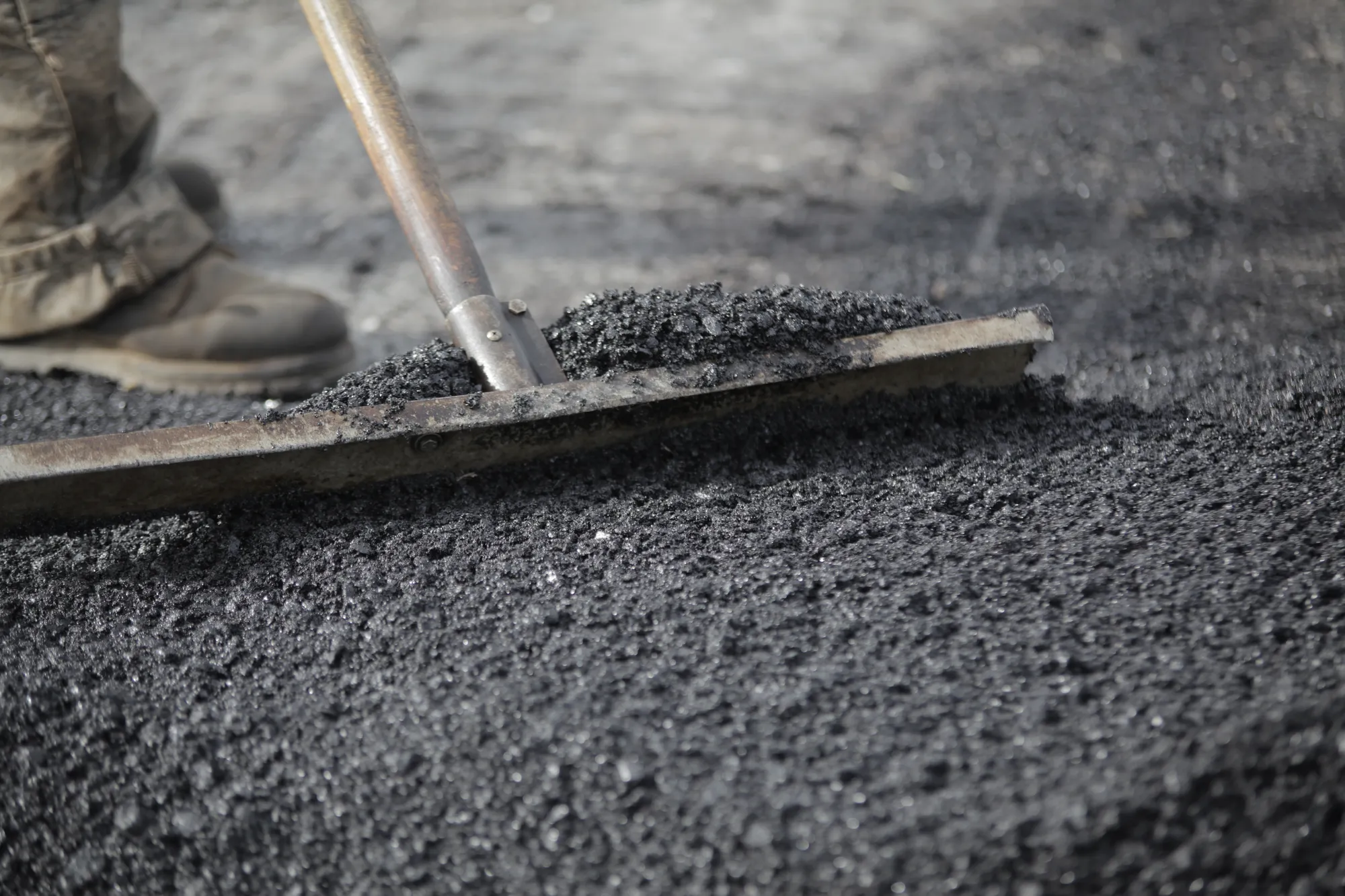
SoyLei and High Oleic Soy in Asphalt: SoyLei Innovations, an Iowa State University spin-off supported by USB and the Iowa Soybean Association, makes soybean oil-based additives that rejuvenate asphalt and enable high recycled-content pavement10, 7. In multi-year National Center for Asphalt Technology trials, the petroleum-based control section began cracking while SoyLei’s section stayed intact10, building on checkoff-supported Iowa State research into a biobased polymer from high oleic soybean oil11. With more than 2.8 million miles of paved public roads in the United States12, the opportunity for soy in roads, parking lots and roofs is significant.
Crafco’s PoreShield™ Concrete Protectant: Developed by the Indiana Soybean Alliance, Purdue University and the Indiana Department of Transportation with checkoff funds, PoreShield is a USDA BioPreferred product that adds more than 10 years of protection to concrete surfaces. Crafco now manufactures it in DeKalb, Illinois, it is being used on piers in San Diego, and Crafco is exploring soy-based roof sealants and packaging13.
Goodyear Tires: U.S. Soy welcomes The Goodyear Tire & Rubber Company’s continued use of soybean oil in select consumer lines of Goodyear- and Cooper-branded tires, which the company offers across 12 lines of consumer tires containing soybean oil. The oil aids tread pliability in cold weather for solid traction and strong grip in wet conditions. Goodyear tires using soybean oil first reached the nationwide market in 2017 through a research partnership with U.S. Soy, and the technology earned the 2018 Tire Technology International Award for Environmental Achievement of the Year(14). Cobb County, Georgia, and New York City are two of the many fleets across the nation rolling on soy-based tires6.
Skechers Shoes: The same technology used in Goodyear tires appears in Skechers footwear, with soy-based rubber in more than 122 styles ranging from boots to sandals and sneakers7.
Okabashi Footwear: Okabashi, a Georgia-based shoemaker, has produced more than 8 million pairs of footwear made with U.S. soy; according to the company, its proprietary biobased material is roughly 40–45% soy by weight and is phthalate-free9.
DEWALT® and Dynamic Green Products Lubricants: Through a checkoff partnership, DEWALT’s soy-based Bar & Chain Biodegradable Oil launched at Home Depot stores nationwide in 2024, along with online platforms such as Grainger and Amazon15. Dynamic Green Products makes high-performance soy-based lubricants sold under its own brand and the DEWALT label, all USDA Certified Biobased7.
High Oleic Hydraulic Fluids: USB worked with Renewable Lubricants to develop a flame-resistant hydraulic fluid from high oleic soybean oil for high-risk environments such as underground mining, and the Grand Canyon Railway maintains equipment across 64 miles of track using a soy-based hydraulic fluid from Renewable Lubricants6.
SoyFoam™ TF 1122 by Cross Plains Solutions: The first firefighting foam ever to earn GreenScreen Certified® Gold status, SoyFoam does not contain PFAS, is readily biodegradable and is 84% biobased under USDA BioPreferred® certification16, 17. It won the 2025 Green Chemistry Challenge Award17, has been used by fire departments across multiple states including St. Stephen, South Carolina18, and has the potential to use the protein from 12 million bushels of soybeans19.
Sport Group Turf and Track: Sport Group, the world’s largest sports-surfaces company and owner of SYNLawn, is putting U.S. soy to work in high-performing landscape and sports turf and track solutions, and has partnered with Guardian Sports on a soy-biobased infill for playing fields. Soy also appears in some of its AstroTurf fields and Rekortan tracks9.
Columbia Forest Products PureBond® Plywood: PureBond uses a soy flour adhesive to create safer, formaldehyde-free plywood. The technology won the EPA Presidential Green Chemistry Challenge Award in 2007, and Columbia Forest Products has produced more than 200 million PureBond panels since converting its operations in 200620.
HempWood® Flooring and Furniture: HempWood bonds hemp fibers with soy flour adhesives to make zero-VOC, formaldehyde-free flooring and furniture that is carbon-negative and 20% harder than oak7. Kentucky’s Warren County Public Schools installed HempWood flooring at Greenwood High School in November 2024, followed by an elementary school in 2025, an installation recognized with a sustainability award21.
Building Demand Where It Counts: Fleets and Facilities
USB’s Biobased Academy for Fleets, developed with the American Lung Association and KCE Public Affairs Associates, certifies fleet managers in the performance, safety and sustainability benefits of soy-based lubricants, hydraulic fluids, tires and other products, and a companion Biobased Academy for Properties and Facilities covers parking lots, grounds and turf. To date, 239 people have been certified across municipal fleets and government organizations — including New York City, which has completed the program, along with staff from Cobb County, the Port Authority of New York, Orange County, Florida, Maryland, Minnesota and Chicago. As of September 30, 2026, 67 professionals have completed the Biobased Academy for Facilities and Properties certification from the American Lung Association6. Fleet managers can browse soy-based options on SoyBiobased.org.
The U.S. Soy Difference
The nearly half-million U.S. soybean farmers who invest in the soy checkoff help drive innovation and expand the use of soy in industrial applications5. A Cornell University study found that domestic demand-enhancing research, which includes new industrial uses, returned $42.88 for every $1 invested, with all checkoff activities combined returning $12.30 per $12.
The soybean’s 80/20 split feeds and fuels a lot of people. Roughly 20% of a soybean becomes oil and 80% becomes high-protein meal. In the 2024/25 marketing year, an average U.S. acre produced nearly 53 bushels of soybeans, yielding about 633 pounds of oil and 2,480 pounds of high-protein meal — enough for renewable diesel, vegetable oil, animal feed and thousands of industrial uses4.
For fiscal year 2027, USB is prioritizing expanded demand for soybean oil in lubricants, surfactants, coatings, rubber and plastics; new soybean meal applications including wood adhesives; and commercialization of products that remove harmful “forever chemicals”5. Its most recent industrial-uses request for proposals sought high-volume technologies in soybean meal, soybean oil and green chemistry22, 7.
Resources
Discover how the USB can help you integrate soy-based solutions into your products and processes at USSoy.org and U.S. Soy Industrial & Manufacturing.
Browse a directory of soy-based products and real-world case studies at SoyBiobased.org.
Sources
All links verified October 2026.
- United Soybean Board. “35 Years of Soy Innovations: Farmer Checkoff Investments Power Markets, Protect Yields and Transform the Future of U.S. Soy.” Press release, February 26, 2026. https://www.soycheckoff.org/news-and-stories/35-years-of-soy-innovations-farmer-checkoff-investments-power-markets-protect-yields-and-transform-the-future-of-us-soy
- United Soybean Board. “United Soybean Board’s Investments Yield Impressive ROI, Drive Value Back to Farmers and Support the Broader Economy” (Cornell University study by Dr. Harry M. Kaiser). Press release, December 6, 2024. https://www.soycheckoff.org/news-and-stories/united-soybean-boards-investments-yield-impressive-roi-drive-value-back-to-farmers-and-support-the-broader-economy
- USDA Rural Development BioPreferred® Program. Golden, J.S., Handfield, R.B., Daystar, J., and Pires, S. “An Economic Impact Analysis of the U.S. Biobased Products Industry: 2023 Update” (2021 data). 2024. https://www.rd.usda.gov/media/file/download/usda-rd-economic-impact-analysis-us-biobased-products-industry-2023-508.pdf
- U.S. Soy (United Soybean Board). “The Whole Bean: How U.S. Soy Helps Feed and Fuel the World.” May 21, 2026. https://www.ussoy.org/articles/the-whole-bean-how-us-soy-helps-feed-and-fuel-the-world
- United Soybean Board. “United Soybean Board Approves FY27 Budget to ‘Sharpen Focus and Maximize Farmer Returns.’” Press release, July 24, 2026. https://www.soycheckoff.org/news-and-stories/united-soybean-board-approves-fy27-budget-to-sharpen-focus-and-maximize-farmer-returns
- United Soybean Board. “From the Farm to the Fleet: How U.S. Soy Is Finding New Demand in City Garages.” Feature story, June 16, 2026. https://www.soycheckoff.org/news-and-stories/from-the-farm-to-the-fleet-how-us-soy-is-finding-new-demand-in-city-garages
- U.S. Soy (United Soybean Board). “From Roads to Retail: Scaling Soy Innovation Across Industries.” December 19, 2025. https://www.ussoy.org/articles/from-roads-to-retail-scaling-soy-innovation-across-industries
- United Soybean Board. “Life Cycle Assessment Shows U.S. Soy’s Carbon Footprint Has Considerably Decreased” (study by Sustainable Solutions Corporation for USB and NOPA). Press release, February 20, 2024. https://www.soycheckoff.org/news-and-stories/life-cycle-assessment-shows-us-soys-carbon-footprint-has-considerably-decreased
- SoyBiobased.org (United Soybean Board). “U.S. Soy Inside Innovation in Athletic Fields, Tracks & Infill” (USDA AMS-approved case study). https://www.soybiobased.org/success-stories/u-s-soy-inside-innovation-in-athletic-fields-tracks-infill/
- SoyBiobased.org (United Soybean Board). “SoyLei Products Meet AASHTO Standard” (USDA AMS-approved case study). https://www.soybiobased.org/success-stories/soyleiaashto/
- Iowa State University BioCentury Research Farm. “High Oleic Soybean Oil Paves Way for Cleaner Asphalt.” December 6, 2019. https://www.biocenturyresearchfarm.iastate.edu/news/2019/high-oleic-soybean-oil-paves-way-cleaner-asphalt
- U.S. Department of Transportation, Federal Highway Administration. Highway Statistics 2024, Table HM-12: Public Road Length by Type of Surface. November 2025. https://www.fhwa.dot.gov/policyinformation/statistics/2024/pdf/hm12.pdf
- U.S. Soy (United Soybean Board). “Soy as a Solution: Soy-Based PoreShield Extends the Life of Concrete Surfaces.” March 2026. https://www.ussoy.org/articles/soy-as-a-solution-soy-based-poreshield-extends-the-life-of-concrete-surfaces
- SoyBiobased.org (United Soybean Board). “Goodyear Expands Use of Soy” (case study). https://www.soybiobased.org/success-stories/goodyearexpandsuseofsoy/
- United Soybean Board. “Soy Checkoff Partners With DEWALT® to Produce a Soy-Based Bar and Chain Oil Now Available at Home Depot.” Press release, March 21, 2024. https://www.soycheckoff.org/news-and-stories/soy-checkoff-partners-with-dewalt-to-produce-a-soy-based-bar-and-chain-oil-now-available-at-home-depot
- U.S. Soy (United Soybean Board). “The Foam That Fights Fire Without the Forever Chemicals.” June 18, 2026. https://www.ussoy.org/articles/the-foam-that-fights-fire-without-the-forever-chemicals
- U.S. Soy (United Soybean Board). “SoyFoam™ Firefighting Foam Wins 2025 Green Chemistry Award, Backed by U.S. Soy Farmers.” October 9, 2025. https://www.ussoy.org/articles/soyfoam-firefighting-foam-wins-2025-green-chemistry-award-backed-by-us-soy-farmers
- SoyBiobased.org (United Soybean Board). “St. Stephen Fire Department Extinguishes Residential Fire With SoyFoam” (case study). https://www.soybiobased.org/success-stories/st-stephen-fire-department-extinguishes-residential-fire-with-soyfoam-2/
- United Soybean Board. “Farmers and Firefighters Join Forces to Eliminate Forever Chemicals.” Press release, May 2, 2024. https://www.soycheckoff.org/news-and-stories/farmers-and-firefighters-join-forces-to-eliminate-forever-chemicals
- U.S. Environmental Protection Agency. “Presidential Green Chemistry Challenge: 2007 Greener Synthetic Pathways Award” (Columbia Forest Products PureBond soy adhesive). https://www.epa.gov/greenchemistry/presidential-green-chemistry-challenge-2007-greener-synthetic-pathways-award
- SoyBiobased.org (United Soybean Board). “HempWood Sustainability Award — Warren County Installation” (USDA AMS-approved case study). https://www.soybiobased.org/success-stories/hempwoodsustainabilityaward/
- United Soybean Board. “Request for Proposals” (Industrial Uses of Soy, RFP IN-01). soycheckoff.org. https://www.soycheckoff.org/request-for-proposals