More crush, more markets: how renewable fuels are driving demand for U.S. Soy
Soy Checkoff farmer leader Director Brent Rendel can see the connection between soybeans and renewable fuels from his farm in northeastern Oklahoma.
Just 45 minutes away in Cherryvale, Kan., a Bartlett soybean crush plant is creating another market for the soybeans he grows — and helping strengthen demand for local production.
10.05.2026
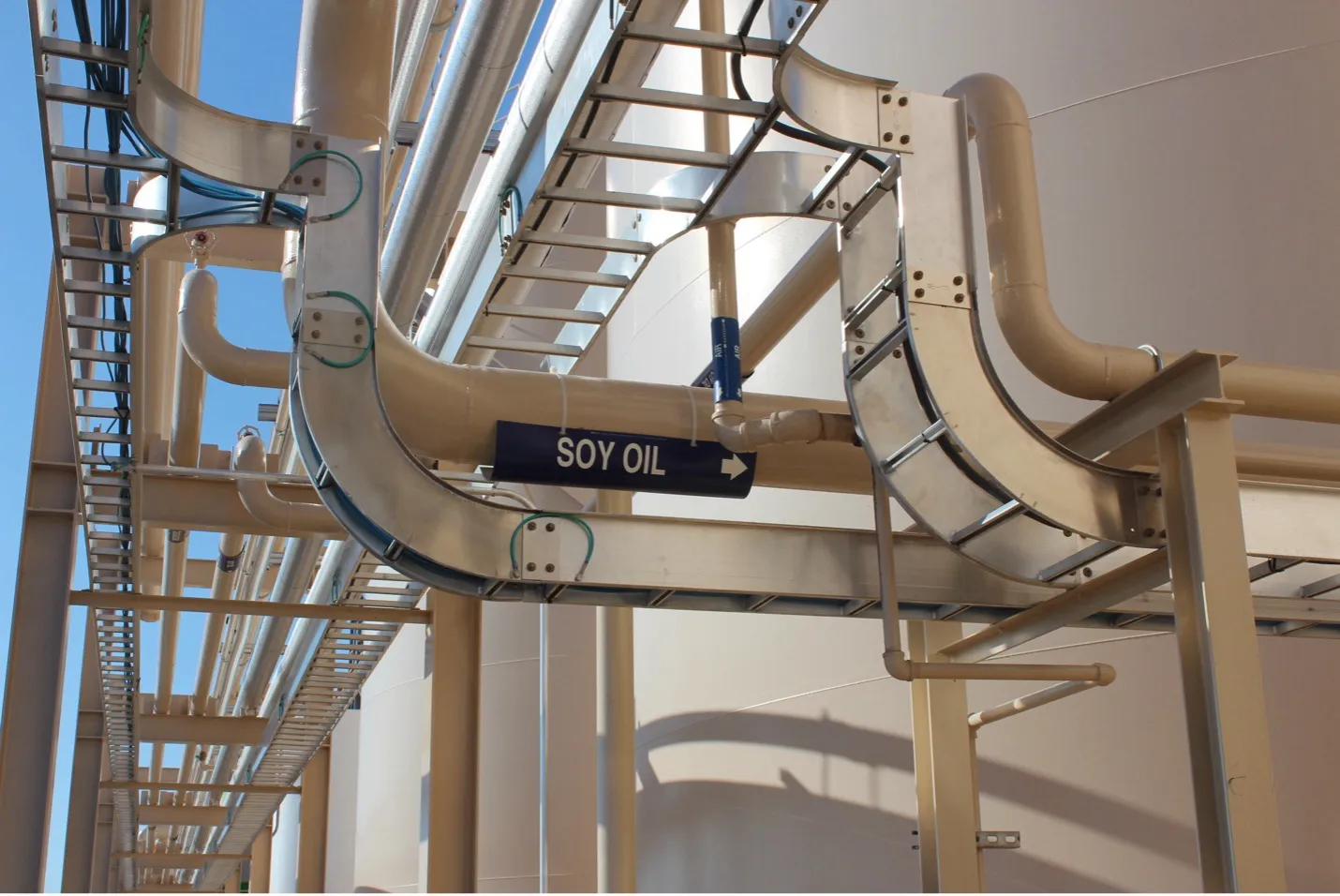
The facility is one example of how growing demand for soybean oil is driving investment in new crush capacity across the country. For farmers like Rendel, that investment can mean more places to sell soybeans, greater marketing flexibility, and stronger local demand.
“Soybeans provide both food security and sustainable energy,” says Rendel. “U.S. soybean farmers are contributing to a global solution in the renewable energy space.”
Renewable fuel demand creates soybean demand
As biodiesel and renewable diesel producers buy more U.S. soybean oil, that demand is showing up at the local elevator. In 2005, the industry produced 91 million gallons of biodiesel. By 2026, production is poised to exceed 5 billion gallons.
Farmer leader Tim Ostrem, who serves on the board of directors of Clean Fuels Alliance America, says federal renewable fuel policy is helping support that growth.
“The Renewable Fuel Standard (RFS) is delivering real results for farmers,” he says.
The RFS requires transportation fuel sold in the United States to contain a minimum volume of renewable fuels. For 2026, the Renewable Volume Obligation (RVO) for biomass-based diesel is set at 5.4 billion gallons — more than 2 billion gallons higher than the 2025 volume.
That increase is helping bring the required volume more in line with the industry's production capacity, Ostrem says, supporting demand for the feedstocks needed to make those fuels.
And soybean oil is increasingly benefiting from that demand.
The industry reached a record monthly biodiesel and renewable diesel production rate of 494 million gallons in June, according to Ostrem. At that monthly pace, annual production would approach 5.9 billion gallons.
“The result,” Ostrem says, “is record demand for soybean oil as the primary feedstock for biodiesel and renewable diesel production.”
In June, soybean oil use for biofuels reached a record 1.56 billion pounds. In 2026, monthly use averaged about 1.2 billion pounds.
A new buyer close to home
For Rendel, the numbers translate into a new market for his soybeans.
Bartlett’s crush facility in Cherryvale opened a few years ago, and Rendel says the facility is an example of what can happen when farmer investment, market development, and growing demand come together.
“It wouldn't be there without sustainable fuel drivers,” he says.
The facility also represents a significant shift in the economics of soybean processing, Rendel emphasizes.
He describes it as a 180-degree flip in the way the industry views soybean oil. While soybean meal remains an important product of the crush process, growing demand for soybean oil from renewable fuels has increased the value of the oil side of the equation.
“When I haul beans to Cherryvale,” Rendel says, “the primary target is to crush them into oil for renewable fuels for domestic use.”
The demand extends beyond the local area. During the last off-season, the Cherryvale facility brought in additional trains of soybeans from Midwestern states, increasing the volume of soybeans available for crushing and further boosting oil production.
For Rendel and other farmers nearby, the plant provides another outlet for their crop.
That matters.
A nearby buyer can reduce transportation costs, create additional competition for soybeans, and give farmers more flexibility when deciding where and when to sell. Rendel says the Cherryvale facility has increased demand for soybeans in the area and helped strengthen basis.
And it’s not the only one. Ostrem says demand for soybean oil in the fuel market drove construction of a new crushing plant in Mitchell, S.D., which opened in 2025. “The Mitchell plant is a benefit to the soybean farmers in our state and across the country for domestic demand,” he says.
Years of farmer investment helped build the opportunity
Rendel sees the plant as more than a new piece of infrastructure. He sees it as the result of years of investments made by soybean farmers through the Soy CheckoffSM.
Checkoff investments in research, market development, and efforts to expand demand have helped position U.S. Soy to benefit as new markets develop.
That work matters because renewable fuel demand doesn't happen in isolation. Building a sustainable market for soybean oil requires infrastructure to crush soybeans, transportation to move them, and customers willing to purchase the resulting products.
“As the 2027 RVO is set to increase a few hundred million gallons, we would expect this high fuel production volume and high feedstock demand to continue through 2027,” Ostrem says.
For farmers, that continued demand can translate into another reason to pay attention to what is happening beyond the farm gate.
Staying ahead of the market
Rendel says soybean farmers also can't afford to assume that today's renewable fuel market will automatically belong to U.S. Soy tomorrow.
Other oilseeds can be crushed to produce biofuels, creating competition for the market. That makes the sustainability and reliability of U.S. soybean production increasingly important.
“Recognizing the value of sustainable-grown U.S. Soy is so important,” Rendel says.
At the Cherryvale facility, farmers complete paperwork to verify sustainable production practices. Rendel says meeting those customer expectations is part of keeping U.S. Soy competitive in a changing marketplace.
“We need to keep implementing sustainable strategies that our customers are asking for, plus provide our end users with a product they can market and use,” he says.
Ultimately, Rendel says, the goal is bigger than today's renewable fuel demand.
“All of this is very important for farmer profitability, so we need to remain cognizant of that,” he says. “Our goal is to be ahead of the game, not working on answers for 2027. We need to be asking questions for 2030 and beyond.”
Related News
Former National Security Council director takes the helm of the nation's Soy Checkoff
United Soybean Board opens nominations for Tom Oswald Legacy Award, Industry Excellence Award
Send us your soybeans: Soy Checkoff invites farmers to prove the quality of their crop