Soy Foods Issue Brief
Soy Foods: Nourishing People, Rewarding Farmers
High-Quality Protein, Healthy Fats and a Place in Federal Dietary Guidance
People have eaten soy for centuries, and the science keeps confirming what those generations figured out. Soy is one of the few plant foods that provides complete protein, meaning it contains all nine of the amino acids the body needs but cannot make for itself1. Americans who eat soy foods regularly also tend to eat better overall, taking in more fiber, more potassium and more healthy fat than people who skip soy1.
That matters to farmers as much as to the people eating it. Food companies put ingredients on the label they can defend, so the Soy Checkoff pays for the research and the industry education that supports the use of soy there2. Roughly 45% of U.S. soybean oil goes to food and other non-biofuel uses2, and every product that keeps soy in its formula protects demand for the crop.
Key Messages
Soy is a high-quality protein: It provides all nine amino acids the body cannot make for itself but needs to function. Very few other plant foods do this.
Source: SNI Global
Federal guidance includes soy: The 2025–2030 Dietary Guidelines name soy among recommended protein foods and raise daily protein targets.
Source: USDA/HHS
The evidence that soy supports improved cholesterol is specific: Twenty-five grams of soy protein a day can lower LDL cholesterol 3% to 4%, from a pooled analysis of 46 high-quality studies.
Source: SNI Global
Soybean oil carries an FDA qualified heart claim: Supportive but inconclusive evidence suggests that about 1½ tablespoons a day may reduce heart disease risk when it replaces saturated fat.
Source: FDA
There is no replacement at scale: Removing seed oils would mean importing palm oil, raising per-person spending on vegetable oils and fats by an average of 42.8%.
Source: WAEES
How processed a food is does not determine whether it is healthy: It is important to focus on the nutrients soy provides and the health benefits they can offer. Many processed soy foods, like fortified soymilk, tofu and soy-based protein alternatives, can provide important nutrients, including high-quality protein, healthy fats, fiber, and some vitamins and minerals like folate, potassium and iron, that support overall health.
Source: USB
Most soy foods qualify as “healthy” under FDA’s rule: Soybean oil, tofu, tempeh, edamame and soynuts are healthy according to the FDA definition, and several other soy foods qualify depending on levels of saturated fat and added sugar.
Source: SNI Global
Soy allergy is uncommon: About 3% of U.S. adults have a soy allergy, fewer than 1 in 100 children are affected, and most outgrow it. Though it is listed as a major allergen in the U.S., global health authorities took soy off the priority food allergen list in 2022.
Source: Soy Connection
Snap Shot
25g/day
25 grams of soy protein a day, as part of a diet low in saturated fat and cholesterol, may reduce the risk of heart disease
Source: SNI Global
3–4%
reduction in LDL cholesterol from 25 grams of soy protein a day
Source: SNI Global
1.2–1.6 g/kg
daily protein target in the 2025–2030 Dietary Guidelines
Source: USDA/HHS
<1%
of children have a soy allergy, and most outgrow it by age 10
Source: Soy Connection
Seven Reasons Soy Foods Matter for Health
Soybeans carry natural plant compounds called isoflavones alongside protein, fiber and healthy fat. That combination is behind most of what follows. One or more of those soybean components delivers the potential health benefits listed.
- Heart and Metabolic Health: Including soy foods in the diet helps lower LDL cholesterol, the cholesterol doctors want low. Pooling 46 studies that FDA itself identified, researchers found that 25 grams of soy protein a day lowers LDL by 3% to 4% in adults. Eating soy regularly is also linked to modest improvements in blood pressure and in blood markers of inflammation1.
- Brain Health: Isoflavones appear to help blood flow to the brain and limit cell damage, and studies have found a link between eating soy and better memory, especially in middle age and later life1. Population studies indicate linoleic acid, the primary fatty acid in soybean oil, may inhibit age-related cognitive decline and decrease the risk of dementia21.
- Blood Sugar: Soy foods do not spike blood sugar, and the protein-and-fiber combination slows digestion so energy stays steadier. Research suggests that eating soy in place of refined carbohydrates or animal protein helps the body use insulin better and tempers the blood sugar rise after a meal1.
- Menopause: In clinical studies, the roughly 30 milligrams of isoflavones in two servings of soymilk cut daily hot flashes by about 20%. Soy isoflavones also support bone health during the years when bone loss speeds up1.
- Cancer: Eating about two servings of soy a day during childhood and the teen years may lower breast cancer risk later in life, and eating soy throughout life is associated with lower risk of both breast and prostate cancer. For women who have had breast cancer, the American Cancer Society and the American Institute for Cancer Research agree that moderate soy intake is safe, and it has been associated with lower recurrence and better survival1.
- Skin: Soy isoflavones help skin hold moisture and elasticity, reducing the appearance of wrinkles when consumed. Research suggests soy may slow visible aging by supporting the body’s collagen production1.
- Weight: Soy protein foods help people feel full and help protect muscle while losing weight. Because soy is nutrient-dense and easy to cook with, it works as a plant-based stand-in for other proteins1.
What Counts as a Soy Food
Soy foods are easier to find than most shoppers think, and they are not stuck in one aisle. The list includes edamame, tofu, tempeh, soymilk, bars, beverages, miso, natto, soynuts, soynut butter, soy yogurt, soy burgers and crumbles, soy flour, textured soy protein and soybean oil, which is what most bottles labeled “vegetable oil” actually contain1.
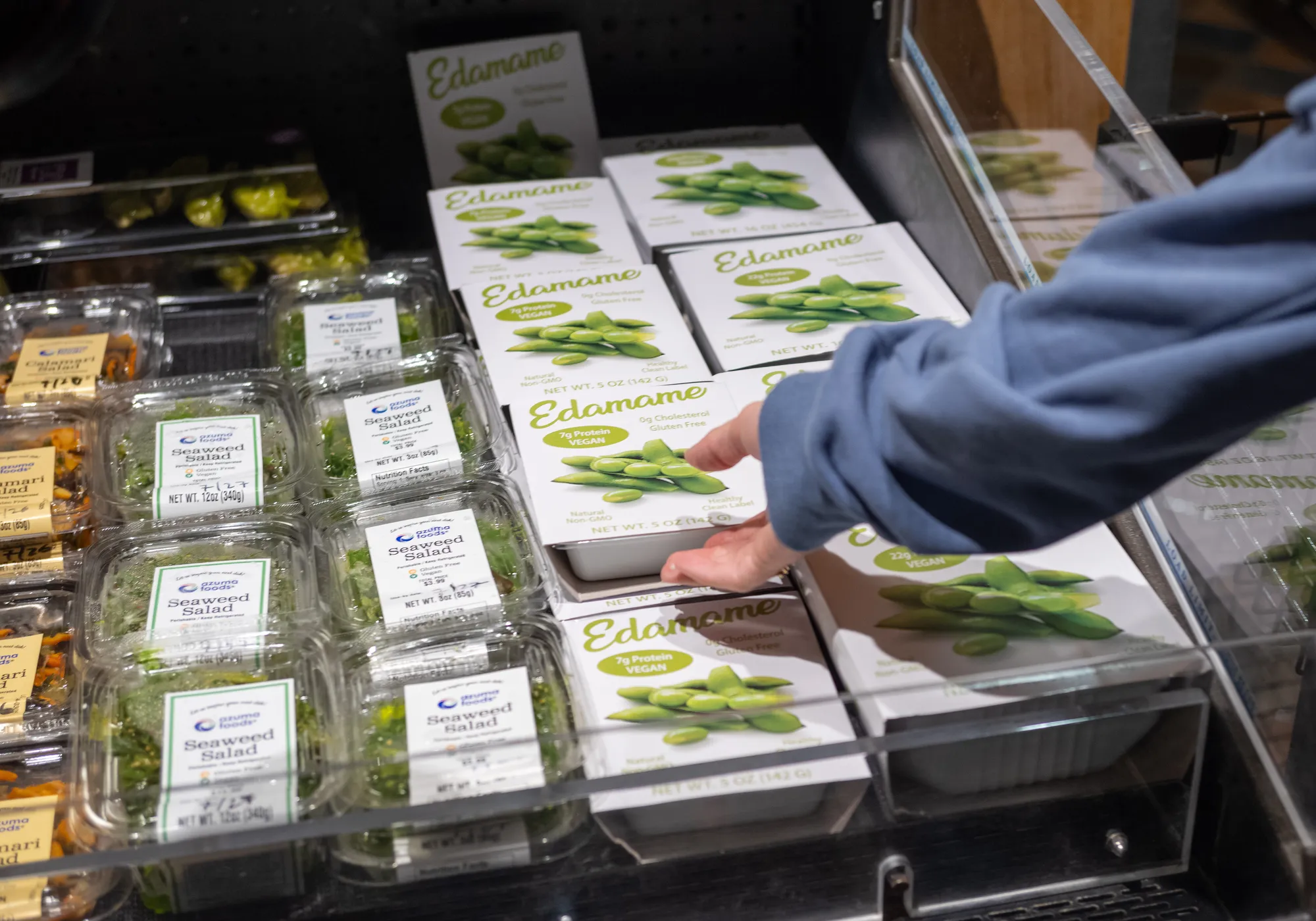
- Edamame: As a composite, about 9 grams of protein and 4 grams of fiber in a half cup of cooked, shelled beans, plus vitamin K and folate1, 23.
- Soymilk: About 7 grams of protein per cup, the only plant milk that matches cow’s milk on protein. Almond and oat milk have roughly 1 to 3 grams. Pooling 17 clinical trials, researchers found soymilk, even sweetened, improved cholesterol numbers, lowered blood pressure and reduced a blood marker of inflammation1.
- Bars: Commonly consumed as convenient, on-the-go snacks and meal replacements, protein bars can provide high-quality soy protein. Check the ingredient list for soy crisps or soy protein among the first ingredients, keeping in mind that protein content varies by product.
- Beverages: Protein beverages are gaining popularity among consumers interested in exercise recovery and weight management, with many products offering increasingly higher protein levels. Some combine soy with other protein sources to optimize flavor and texture. Look for ready-to-drink beverages or powdered mixes containing soy protein isolate as a primary ingredient.
- Tofu: A high-quality protein, often set with calcium, which also supports bone health. One study linked eating about 27 grams of tofu a day, roughly a one-inch cube, with an 18% lower risk of heart disease1.
- Tempeh: As a composite, about 17 grams of protein in a 3-ounce serving, about 82 milligrams of calcium, and about 6.7 grams of fiber that feeds helpful gut bacteria1, 24.
- Miso and Soy Yogurt: Fermented soy foods supply live cultures and compounds that support digestion. The Dietary Guidelines single out fermented soy foods such as miso for gut health4, 1.
- Soynuts and Soynut Butter: Seven grams of protein and 3.4 grams of fiber in two tablespoons of soynut butter. In postmenopausal women with high blood pressure, adding soynuts to a heart-healthy diet lowered the top blood pressure number by 9.9% and the bottom number by 6.8%, and cut hot flashes and other menopause symptoms by 45% 1.
- Soy Burgers, Crumbles and Sausages: As a composite, usually 15 to 20 grams of protein per serving, often less saturated fat than meat, and frequently fortified with important vitamins and minerals like iron, zinc and B121, 25.
Seed Oils: What the Science Supports
Seed oils are oils pressed from the seed of a plant. The ones most commonly referenced include soybean, corn, canola, cottonseed, sunflower, safflower, grapeseed and rice bran. Questions about them come up often, and they deserve answers grounded in evidence. Having looked at that evidence, the major health authorities still recommend them as good sources of fat, including the American Heart Association, the Academy of Nutrition and Dietetics, the World Health Organization and the Dietary Guidelines for Americans5. Because soybean oil’s place in the food supply matters to farmers as well as shoppers, the checkoff invests in making that research easy to find6.
What the nutrition research shows. Seed oils are a main source of two fats the body cannot make on its own and has to get from food: linoleic acid, an omega-6 polyunsaturated fat, and alpha-linolenic acid, an omega-3 polyunsaturated fat7. Replacing saturated fat with unsaturated fats, like those in soybean oil, is one of the steadiest findings in heart health research. Linoleic acid-rich oil like soybean oil lowers LDL cholesterol and may reduce heart disease risk, and studies indicate that eating linoleic acid can cut the risk of coronary heart disease by 29%. Research also suggests linoleic acid helps the body use insulin better, with diabetes risk falling as intake rises. Seed oils like soybean oil are a good source of vitamin E, which supports the immune system, vision, brain health and skin7. FDA recognizes soybean, canola, corn and olive oils for their potential heart health benefits, and soybean oil carries an FDA claim that eating about 1½ tablespoons a day may reduce heart disease risk when it takes the place of saturated fat8, 7.
On the questions people ask most: clinical research shows omega-6 linoleic acid does not increase inflammation or oxidative stress, the kind of cell damage sometimes attributed to it, and population studies consistently link higher omega-6 intake with less inflammation, not more. On processing, a person would have to consume more than 100 times the average daily amount of oil to approach even the most cautious safety limit for hexane, the solvent used to extract oil from the seed. On how much we eat, the American Heart Association recommends 5% to 10% of daily calories come from linoleic acid, and Americans average about 8%, right in the middle5.
Put together, the evidence says removing seed oils would not be a neutral change; it would come with potential health risks. Soy Nutrition Institute Global’s review concludes that removing seed oils from the diet could result in higher cholesterol, increased heart disease and diabetes risk, and inadequate intake of essential fats and vitamin E7. Most shoppers seem to have reached the same conclusion on their own: a study by the International Food Information Council found 7 in 10 Americans do not avoid seed oils5, and the checkoff’s Seed Oil Hub now ranks among the 25 most trusted sources of seed oil information online2.
What the supply numbers show. A 2025 economic study paid for by the United Soybean Board and conducted by World Agricultural Economic and Environmental Services asked a practical question: what would actually happen if seed oils were removed from the American food supply? Americans eat about 57.7 pounds of seed oil a year each, 33.2 pounds of it soybean oil. Replacing that volume runs into a hard limit, because the alternatives do not exist in that quantity9.
- Olive oil costs far more than everyday cooking oils and cannot compete on price for large-scale food use9.
- Peanut oil runs into supply limits. Doubling American use would mean importing roughly 6.8 times what the country imports today, which would require world exports to jump 137%9.
- Animal fats are byproducts of raising animals, so the supply does not grow just because demand does. More than 80% of lard already goes to food. About 1.4 billion pounds of white grease is produced each year with roughly 30% already going to food, and redirecting every bit of it would add less than 3 pounds per person. Edible tallow might add about 3.3 pounds per person at most9.
- Palm oil is the only alternative big enough to fill the gap, and the United States grows almost none of it. The study projects palm oil would supply about 52 pounds per person, all imported, expanding palm plantations worldwide by 3.3 million acres by 2035 and pushing palm from a 26% price premium over soybean oil to a 78% premium9.
The shortage would result in increased costs. If Americans kept eating the same total amount of fat and oil, they would spend an average of 42.8% more per person to do it, and the government’s price index for oils and fats would run 28.7% higher. If the substitutes simply were not there, people would eat less fat and oil, with consumption dropping 21.1 pounds per person, or 29%, while still paying about 8% more. For farmers, the same study projects soybean prices down 3.4%, returns down 6.7%, 2.8 million fewer acres planted, crop cash receipts down $3 billion a year and farm income down $1.9 billion a year. Livestock producers would pay more for soybean meal, and meat supplies would shrink9.
The study’s authors were clear that judging health effects was outside their expertise, so these are market projections, not predictions about anyone’s body9. Read next to the nutrition research above, though, the two point the same way: the only replacement available at scale is either higher in saturated fat or has to be imported, and the seed oils being questioned have decades of scientific research that support their safety and health benefits9. Soybean oil is also simply practical in a kitchen, with a neutral flavor and a smoke point near 450°F that suits high-heat cooking5.
High oleic soybean oil raises the ceiling. Checkoff investment in high oleic genetics produced a soybean oil built for the hardest jobs in a commercial kitchen. High oleic varieties contain at least 70% oleic acid, compared with roughly 22% to 28% in conventional soybeans. That makes the oil break down far more slowly under heat, holding up for more than 25 hours in the standard laboratory stability test and lasting two to three times as long in a fryer10, 11. It carries three times the healthy monounsaturated fat of many conventional vegetable oils and more than 20% less saturated fat than commodity soybean oil. For oils with at least 70% oleic acid, FDA allows a claim that supportive but not conclusive evidence suggests they may reduce heart disease risk when they replace fats higher in saturated fat12, 10. For restaurant operators, the oil also leaves less gummy residue on equipment and lets manufacturers drop added synthetic antioxidants10. Growing the high oleic market is one of the checkoff’s four food priorities, and the investment has returned about $3 for every $1 invested and delivered more than $400 million in premiums to farmers who planted high oleic varieties through 20252.
Answering the Harder Questions
- Ultra-Processed Foods: There is no agreed-upon definition for the term “ultra-processed food,” but the most referenced one captures a variety of soy foods, including plant-based meat alternatives, soymilk, foods with concentrated sources of soy protein, and even some types of tofu. How much a food is processed is not a reliable guide to whether it is good for you. (FDA and USDA issued a joint request for information on defining ultra-processed foods in July 2025.) A food’s healthfulness is best measured by its nutrient content and its effects on health, not by its processing level. Soy foods are nutrient-dense, and steps like fermenting and fortifying actually improve nutrition, safety and availability, putting accessible and nutritious options within reach of more people4, 2.
- The Soy Protein Heart Claim: Soy is the only plant protein with an FDA-authorized health claim: “25 grams of soy protein a day, as part of a diet low in saturated fat and cholesterol, may reduce the risk of heart disease”1. The claim is still in effect and still appears on labels. One thing worth knowing: FDA proposed in October 2017 to withdraw it, however the authorized claim remains in effect13.
- The FDA “Healthy” Label: FDA’s December 2024 rule set two tests a food must pass to call itself healthy on the package: it has to deliver a meaningful amount from a recommended food group, and it has to stay under limits for saturated fat, sodium and added sugar. Soybean oil, tofu, tempeh, edamame and soynuts pass outright. Soymilk, soy yogurt and soynut butter qualify when they stay under the sugar and sodium limits, and some soy-based meat alternatives qualify too. The rule also excludes the saturated fat that occurs naturally in nuts, seeds and soy from the count14.
- Soy Allergies: In the U.S., soy is one of nine foods noted as a major allergen, which is why it has to be called out on product labels. However, the number of people with a soy allergy is much lower than other food allergens — only about 3 out of every 1,000 adults are allergic to soy. Fewer than 1 in 100 children have a soy allergy, and most outgrow it by age 10. In 2022 the Food and Agriculture Organization and World Health Organization recommended taking soybeans off the global priority allergen list, pointing to how uncommon the allergy is, how mild the typical reaction is and how rarely it turns severe15. For people who cannot eat dairy or other proteins, soy is an important source of nutrients.
- Men’s Health: Soy is a strong protein choice for men. It delivers high-quality protein that helps build and preserve lean muscle, and research shows soy protein supports gains in strength and lean tissue comparable to whey1. The most comprehensive evidence confirms soy has no effect on male hormones: a meta-analysis pooling 41 clinical studies, with total testosterone measured in 1,753 men and estrogen in 1,000 more, found that neither soy protein nor isoflavones changed testosterone or estrogen levels at any dose or duration16.
- Children and Infant Formula: Soy foods provide infants, children and teens with high-quality protein and support healthy growth. Soy infant formula is a safe and appropriate choice: a longitudinal study following children from birth to adolescence found soy and cow-milk formulas produced comparable outcomes across growth, neurodevelopment, skeletal health and development, and the American Academy of Pediatrics recognizes that soy infant formula promotes normal growth and development22. A separate study following infants through 28 weeks found soy formula did not alter normal early hormone patterns17. For older children, soy foods supply the same high-quality protein, essential fats and nutrients they do for adults1. This brief is general information, not medical advice; families should talk with a pediatrician or another qualified provider.
New Angles Worth Watching
- The GLP-1 Opportunity: More and more people are taking new weight-loss medications, and a paper in Advances in Nutrition suggests this moment is an unusual opportunity. By quieting the constant background noise and thoughts about food in the brain, these drugs open a window when patients are more able to build habits that stick. The authors suggest patients aim for roughly equal amounts of plant and animal protein, with soy foods such as edamame, tofu, soymilk, tempeh and soy protein bars and drinks as the practical, nutrient-dense choice for plant protein. Because the medications shrink the appetite, every bite has to work harder, which favors foods that deliver multiple key nutrients such as soy, which has high-quality protein, fiber and good fat. Soy Nutrition Institute Global helped fund the paper with support from U.S. Soy18.
- Higher Protein Targets Cut Both Ways: The new Dietary Guidelines send people looking for more protein, and where they find it matters3. Soy is well-positioned because it delivers quality protein and essential fat at once, and soy protein can be blended with animal protein, for example, mixing textured soy protein into ground beef for chili, tacos or burgers, to add protein while lowering the saturated fat and cholesterol19.
- New Published Recommendations for Meat Alternatives: Dietary guidance published in Frontiers in Nutrition in 2025 lays out how plant-based meat alternatives can fit into a healthy diet. Soy protein is the main protein in most of these products, so guidance on them speaks directly to soy demand1.
- Food-Grade Soybeans Pay a Premium: Soy foods are a farm income story too. Food-grade soybeans, grown and handled under strict cleaning and separation rules, earn a premium over commodity beans and fit well in a corn-and-soybean rotation. The work is exacting: combines, trucks, augers and bins all have to be cleaned to keep the crop pure1.
- Affordability Is an Underused Argument: Soybean oil is one of the cheapest cooking oils on the shelf1, and soy foods are widely available and many are affordable, which matters for anyone trying to eat more protein on a budget19.
- Soy Foods Month Is an Annual Opening: Every April, USB and its partners use Soy Foods Month to put soybean oil and soy foods in front of shoppers and health professionals, with guides, recipes and dietitian materials ready to share6, 1.
The U.S. Soy Difference
Soy competes with every other ingredient for shelf space and a spot on the label, and it holds that spot because farmers paid for the science behind it. Checkoff money funds four priorities in the food market: bringing science to the conversation about vegetable oils, expanding domestic use of soybean oil and protein, speeding up high oleic adoption, and making soy’s nutritional case undeniable to the food companies and health professionals who shape demand2.
Much of that work happens where shoppers never see it. The checkoff follows the conversations that affect soy’s standing in the food supply and responds with research, facts and industry experience2. Checkoff-funded studies on seed oils earned national news coverage, and hundreds of health professionals have since used that data in their own newsletters, blogs, talks and one-on-one patient interactions6. Soy Nutrition Institute Global, backed by the checkoff, produces and shares the fact sheets, guides and dietitian toolkits that clinicians rely on1.
The past year brought the biggest change in federal nutrition advice in a decade. On January 7, 2026, USDA and the Department of Health and Human Services released the 2025–2030 Dietary Guidelines for Americans. It named soy among the protein foods Americans should eat, and increased the amount of protein people should aim for: 1.2 to 1.6 grams for every kilogram of body weight each day3. In plain terms, a 150-pound adult should target about 82 to 109 grams of protein daily, or roughly 3 to 4 ounces. A 200-pound adult should target about 109 to 145 grams, closer to 4 to 5 ounces. That is ounces of protein, not ounces of food, which is why it matters how much protein a food actually carries. A cup of soymilk delivers about 7 grams of protein and a half cup of edamame just over 9 grams. These guidelines also impact what goes on the plate in school meals, WIC and SNAP4, so soy’s inclusion in them is a demand story as much as a nutrition story.
The fit between soy’s nutrition and the new Dietary Guidelines is the payoff from decades of farmer-funded research into soy’s role in health, food access and sustainable diets4. Soy foods are well positioned to help Americans hit higher protein targets while also delivering essential fat, a combination few single foods offer19. For fiscal year 2027, USB continues funding research, promotion and education across food, feed, fuel, industrial uses, exports and sustainable production20.
Resources
The scientific authority on soy in human health and nutrition at SNI Global, with its Health Professional Hub and fact sheets.
Download the 2026–2027 Soy Foods Guide for benefits, shopping tips, cooking advice and dietitian-developed recipes.
Science-backed answers to consumer questions about seed oil safety, health and nutrition at the Seed Oil Hub.
The consumer source for soy recipes, nutrition information and research at Soy Connection.
Explore the whole crop at U.S. Soy, and remember that animal agriculture is still soy’s biggest customer, covered at the U.S. Soy Center for Animal Nutrition and Health.
Resources on food safety, transparency and earning consumer trust at the Center for Food Integrity.
Sources
All links verified October 2026.
- Soy Nutrition Institute Global (supported by the Soy Checkoff). “Soy Foods Guide, 2026–2027.” April 2026. https://sniglobal.org/wp-content/uploads/2026/04/2026_Soy-Foods-Guide_Final.pdf
- United Soybean Board (Soy Checkoff). “Keeping Soy in Demand and on the Plate.” soycheckoff.org. https://www.soycheckoff.org/food
- U.S. Department of Agriculture and U.S. Department of Health and Human Services. Dietary Guidelines for Americans, 2025–2030. January 7, 2026. https://cdn.realfood.gov/DGA.pdf
- United Soybean Board. “New Dietary Guidelines Reinforce Soy’s Role in Healthy Diets.” Press release, January 15, 2026. https://www.soycheckoff.org/news-and-stories/new-dietary-guidelines-reinforce-soys-role-in-healthy-diets
- U.S. Soy (United Soybean Board). “What Are Seed Oils and Their Benefits?” Seed Oil Hub, ussoy.org. https://www.ussoy.org/allaboutseedoils
- United Soybean Board. “Fighting Misinformation, Protecting Your Bottom Line: Soy Checkoff Champions Seed Oils During Soy Foods Month.” Press release, April 3, 2025. https://www.soycheckoff.org/news-and-stories/fighting-misinformation-protecting-your-bottom-line-soy-checkoff-champions-seed-oils-during-soy-foods-month
- Soy Nutrition Institute Global (supported by the Soy Checkoff). “Potential Public Health Risks of Avoiding Seed Oils.” Fact sheet, February 2025. https://sniglobal.org/wp-content/uploads/2025/02/02052025_SNIGlobal_SeedOilFactSheet.pdf
- U.S. Food and Drug Administration. “Soybean Oil and Reduced Risk of Coronary Heart Disease” (qualified health claim). July 31, 2017. https://www.fda.gov/media/106649/download
- World Agricultural Economic and Environmental Services. Kruse, J., Foreman, M. and Denny, S. “US Seed Oil Ban Scenario: A Scenario off the November 2024 Baseline.” Supported by the United Soybean Board, project #3106-2025-001. March 27, 2025. https://sniglobal.org/wp-content/uploads/2025/04/CA5734_033125_Seed-Oil-Ban-Report-3-27-2025_USDAApproved.pdf
- U.S. Soy (funded by the United Soybean Board). “High Oleic Soybean Oil.” Food Industry Solutions, food.ussoy.org. https://food.ussoy.org/food-industry-solutions/soy-fats-oils/high-oleic-soybean-oil/
- U.S. Soybean Export Council (Soy Checkoff partner). Sanders, R. and Tegeder, D. “US High Oleic Soybeans & High Oleic Soybean Oil Sourcing Guide for International Customers,” Fifth Edition. September 2026. https://ussec.org/wp-content/uploads/2026/09/USSEC-High-Oleic-Sourcing-Guide_2026-Fifth-Edition.pdf
- U.S. Food and Drug Administration. “FDA Completes Review of Qualified Health Claim Petition for Oleic Acid and the Risk of Coronary Heart Disease.” Constituent Update, November 19, 2018. https://www.fda.gov/food/hfp-constituent-updates/fda-completes-review-qualified-health-claim-petition-oleic-acid-and-risk-coronary-heart-disease
- U.S. Food and Drug Administration. “Questions and Answers on Health Claims in Food Labeling.” fda.gov. https://www.fda.gov/food/nutrition-food-labeling-and-critical-foods/questions-and-answers-health-claims-food-labeling
- Soy Nutrition Institute Global. “Many Soy Foods Qualify for ‘Healthy’—Here’s Why.” May 12, 2026. https://sniglobal.org/many-soy-foods-qualify-for-healthy-heres-why/
- Soy Connection (Soy Checkoff). “Debunking the Soy Allergy Myth.” soycheckoff.org. https://ussoy-870ff34e1ac-static-assets.nyc3.digitaloceanspaces.com/debunking-the-soy-allergy-myth.pdf
- Soy Nutrition Institute Global. Reed, K.E., Camargo, J., Hamilton-Reeves, J., Kurzer, M. and Messina, M. “Neither Soyfoods Nor Isoflavones Affects Male Reproductive Hormones: An Expanded and Updated Meta-Analysis of Clinical Studies.” Reproductive Toxicology, 2021;100:60-67. https://sniglobal.org/publications/neither-soyfoods-nor-isoflavones-affects-male-reproductive-hormones-an-expanded-and-updated-meta-analysis-of-clinical-studies/
- Soy Nutrition Institute Global. Messina, M. “No Hormonal Effects Observed in Infants on Soy Formula.” June 4, 2021. https://sniglobal.org/no-hormonal-effects-observed-in-infants-on-soy-formula/
- Soy Nutrition Institute Global. “New Perspective Suggests Emerging Obesity Medications May Unlock Plant-Forward Eating” (perspective in Advances in Nutrition, partially funded by SNI Global with support from U.S. Soy). July 21, 2026. https://sniglobal.org/new-perspective-suggests-emerging-obesity-medications-may-unlock-plant-forward-eating/
- Soy Nutrition Institute Global. “New Dietary Guidelines for Americans Affirm Soy’s Uniquely Beneficial Role in the Diet.” January 9, 2026. https://sniglobal.org/new-dietary-guidelines-for-americans-affirm-soys-uniquely-beneficial-role-in-the-diet/
- United Soybean Board. “United Soybean Board Approves FY27 Budget to ‘Sharpen Focus and Maximize Farmer Returns.’” Press release, July 24, 2026. https://www.soycheckoff.org/news-and-stories/united-soybean-board-approves-fy27-budget-to-sharpen-focus-and-maximize-farmer-returns
- Soy Nutrition Institute Global. Messina, M. “Findings Suggest Linoleic Acid Exerts Cognitive Benefits” (UK Biobank analysis of ~300,000 adults). May 2026. https://sniglobal.org/findings-suggest-linoleic-acid-exerts-cognitive-benefits/
- Da Cruz, L.L., et al. “Longitudinal Evaluation From Birth to Adolescence of Soy Protein–Based Infant Formula Compared With Cow Milk–Based Formula and Breastfeeding: A Comprehensive Summary of Findings.” Advances in Nutrition, 2026;17(7):100669 (listed on USDA ARS). https://pmc.ncbi.nlm.nih.gov/articles/PMC13316684/
- U.S. Department of Agriculture, FoodData Central. “Edamame, Frozen, Prepared” (nutrient profile; AMS-referenced record). fdc.nal.usda.gov. https://fdc.nal.usda.gov/food-details/520533/nutrients
- U.S. Department of Agriculture, FoodData Central. “Tempeh” (nutrient profile; values converted to a 3-ounce serving). fdc.nal.usda.gov. https://fdc.nal.usda.gov/food-details/172467/nutrients
- Frontiers in Nutrition. “Dietary Guidance for Plant-Based Meat Alternatives.” 2025. frontiersin.org. https://www.frontiersin.org/journals/nutrition/articles/10.3389/fnut.2025.1641234/full