Reducing input costs
10.14.2026
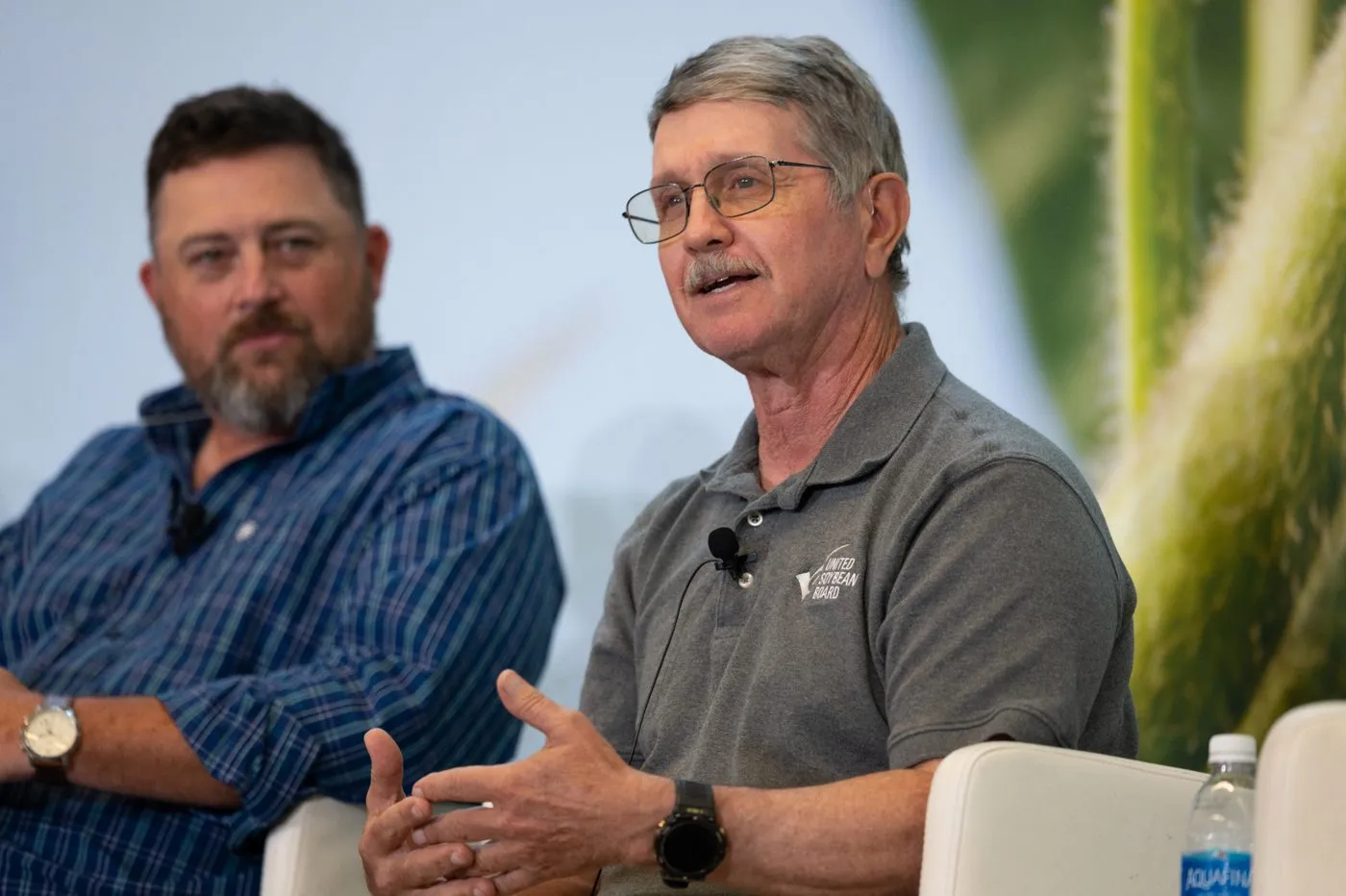
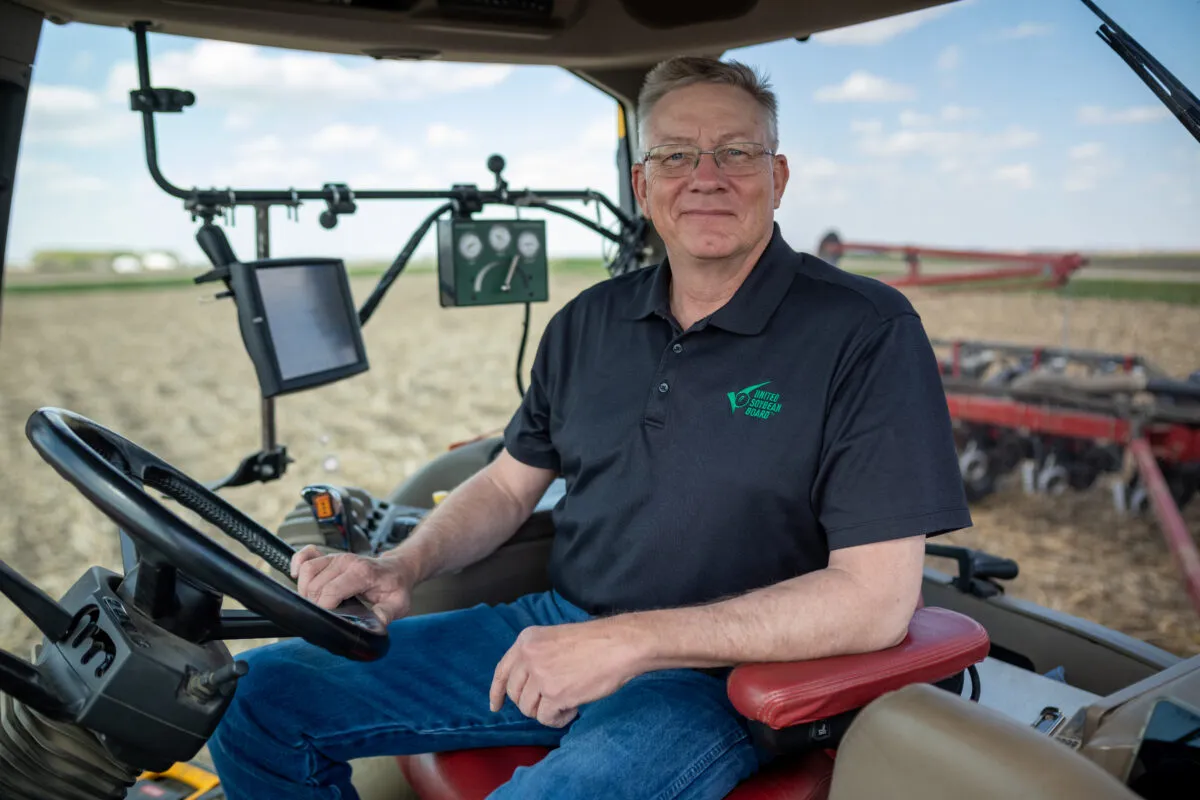
During the American Soybean Association’s Farmer Forum in Ankeny, Iowa, Brent Rendel shared his viewpoints on conservation and cost control. Rendel farms in Northeast Oklahoma, where his family has worked for about 130 years. He also serves as a farmer-leader for the national Soy Checkoff, helping decide how checkoff dollars are invested. On both fronts, his approach to cost savings comes down to one idea: don't take anyone's word for it. Prove it on your own acres.
Efficiency starts with a question
For Rendel, conservation and cost control aren't separate conversations. Practices that build soil health are welcome. Practices that also improve his bottom line are the ones that stick.
"If it is regenerative, if it's good for the soil, that's a great benefit," said Rendel. "If it is great for my bottom line, that is an even more important benefit."
That thinking has shaped how he farms. He has moved toward no-till where he can and vertical tillage where he must. He also has used fertilizer more efficiently and has explored shifting from synthetic sources toward manure.
"Our attraction to no-till, our attraction to being more efficient with using fertilizers, it really is about the bottom line," said Rendel.
He is candid that not everything pays off right away. Cover crops have been a struggle in a region where rain comes in bursts and then disappears. But the goal hasn't changed. "Being more efficient with what I do and how I do it is the challenge," said Rendel.
Test it, or you're guessing
"The only way to get an answer for what works on your farm is to test on your farm," said Rendel.
And a real test, he stressed, isn't putting something on a field and hoping for the best. It needs a comparison.
"As a farmer, if I'm doing a fertility test, I will have a zero-fertility check in there," said Rendel. "I know it's not going to work. But if you don't know what happens when you don't do something, you don't know what's happening when you actually do something."
That matters most when a product promises to replace an input that farmers already pay for. If a company says its biological can take the place of nitrogen, Rendel wants a strip with no nitrogen at all to see whether the claim holds up. It takes the guesswork, and the sales pressure, out of the decision.
Rendel also said that farmers should set aside a portion of their acres specifically for learning. Maybe it's 10%, maybe it's 5%. The point is to keep testing, because conditions and products never stop changing.
Another step farmers can take to find some assistance while making these changes is finding an agronomist whose paycheck doesn't depend on selling inputs, someone who can give honest guidance and even point toward cost-share programs.
Thinking five years out
Rendel also pushed farmers to look past next spring. Cost-saving practices rarely deliver overnight, and the farmers best positioned to benefit from new programs are the ones who've already done the homework.
"I can't ask the question of what I need to do next year," he said. "I need to ask the question of what I need to do in five or 10 years. Because if I'm not asking that question today, when somebody comes along with a program that I might be able to leverage, I need to know what works on my farm."
He pointed to the Soy Checkoff’s Farmers for Soil Health program as one example. Farmers for Soil Health offers financial incentives and local technical support to assist farmers in the early stages of adopting these practices. Enrollment is closed for 2026, but Rendel encourages farmers to keep this program in mind for 2027.
Where checkoff dollars fit in
The Soy Checkoff doesn't make or sell anything. It partners with universities, companies and government agencies to deliver research farmers can use to farm more profitably.
Checkoff-funded researchers studying soybean genetics found that the markers tied to drought tolerance were the same ones tied to handling excess water.
"Soybeans that deal really well with not a lot of water also tend to do really well with too much water," said Rendel. That means progress for dry-country farmers like him can benefit growers in wetter regions, too.
The payoff beyond the farm gate
Rendel recently visited Goodyear's largest tire plant in North America to meet with fleet managers from Atlanta, Washington, D.C., and New York, to explain the soy story. Goodyear has partnered with the Soy Checkoff for years to replace some of the petroleum-based ingredients in its tires with soybean oil
Their first question for the farmers was about sustainability: how soybeans are grown, and how farmers manage water and conserve resources. Those buyers wanted to tell their city governments why soy-based tires made sense, and they wanted to connect that story back to the farm.
For Rendel, that's the full picture. The same practices that help farmers spend less per acre are the ones end users are asking about. Farmers who test, track and prove what works aren't just protecting their margins. They're building the story customers want to buy.
Related News
More crush, more markets: how renewable fuels are driving demand for U.S. Soy
Former National Security Council director takes the helm of the nation's Soy Checkoff
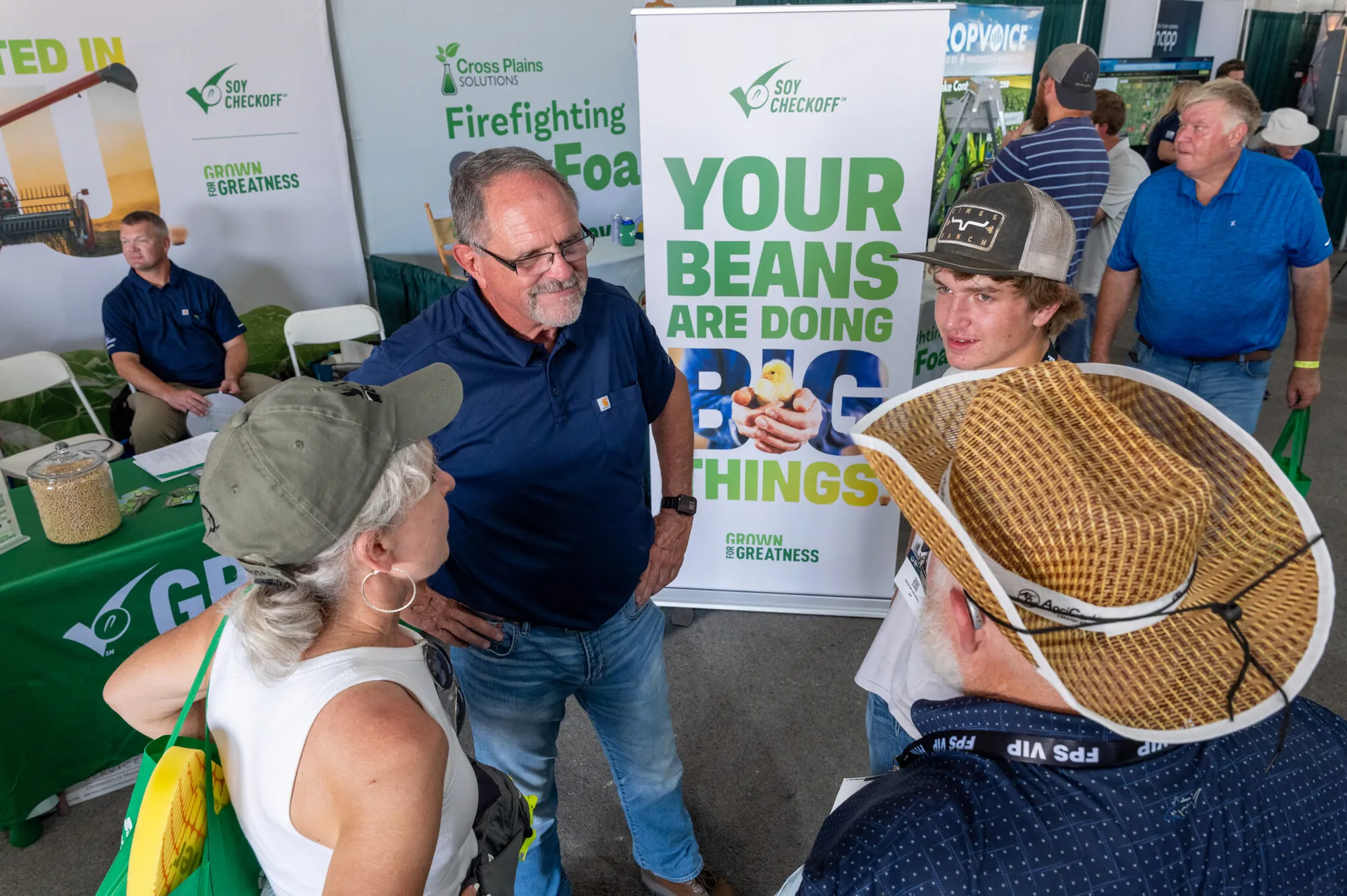
Farmer-leaders put a face to the Soy Checkoff at Farm Progress Show