This National Pork Month, winter feeding decisions can help producers beat the summer dip
10.26.2026
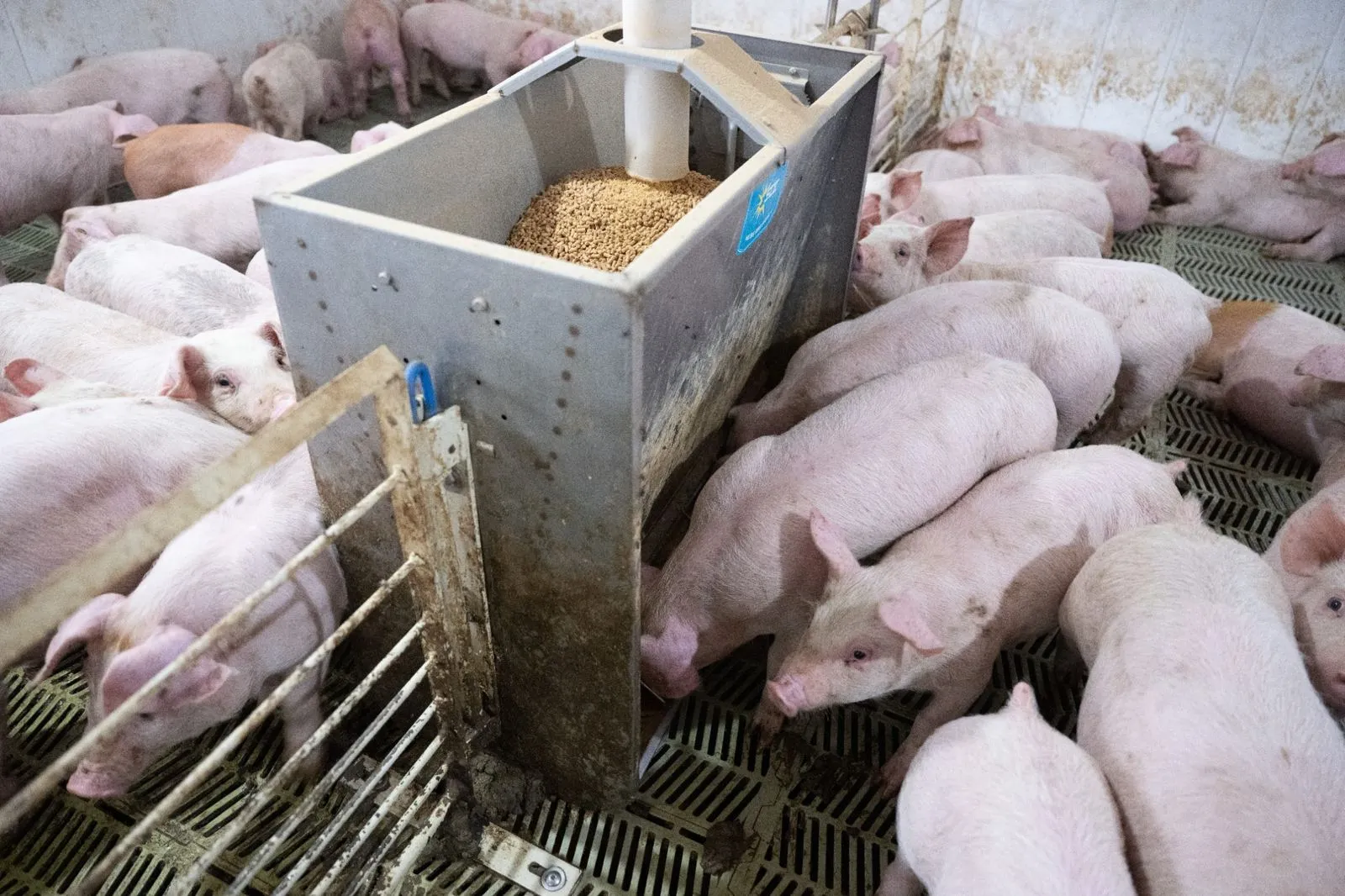
October marks National Pork Month, a time to recognize pork producers and the partnerships that help keep their farms productive. For soybean farmers, that connection starts in the feeder. Soybean meal is the leading protein source in U.S. pig diets, and checkoff research shows it also delivers more energy as compared to traditional book values.
This fall, the partnership also offers a reason to look ahead. Commercial research shows higher levels of soybean meal in pig diets can help address a costly seasonal challenge: the summer dip in carcass weights.
“The pigs we’ll sell next summer go into the barn this winter, and that’s when the diets get set,” said Tim Bardole, a Soy Checkoff farmer-leader from Rippey, Iowa, who grows soybeans and raises pigs. “If you wait until the heat shows up to think about carcass weights, the formulation decisions that matter have already been made.”
Planning now for next summer
When temperatures rise, pigs eat less and grow more slowly as they approach market weight. Heat stress is estimated to cost the U.S. swine industry hundreds of millions of dollars each year, much of it in the grow-finish barn where the summer dip occurs.
Addressing that loss starts months before hot weather arrives. Pigs marketed during the summer dip typically begin grow-finish diets in late winter, putting key formulation decisions in December and January. That makes National Pork Month an opportunity to bring research into conversations about summer 2027 feeding programs.
As part of the Soy Effect research publication series, nutritionists at a large commercial pork system conducted a trial using higher levels of soybean meal to maximize feed intake and growth in pigs headed for summer markets.
In that system, the program increased carcass weights by an average of 5.5 pounds per pig over the summer compared with the system’s previous high-energy feeding program, while also lowering feed costs per pig. ¹
A second checkoff-supported commercial trial in Iowa in 2024 pointed in the same direction. A cooler-than-usual summer reduced the seasonal dip, but daily gain and other performance measures still trended favorably. ²
Many producers are already putting this to work. In a 2026 Soy Checkoff survey of swine nutritionists who together represent about 3.6 million sows, 60% of respondents said they had increased soybean meal in late-finishing diets to help offset the summer dip. ³
Moving research into commercial feeding programs
Turning findings like these into feeding decisions is central to a broader change in the Soy Checkoff’s animal nutrition work. The checkoff recently retired its single Animal Nutrition Working Group in favor of four species advisory teams focused on swine, poultry, beef and dairy.
The approach builds on a swine advisory team formed in 2022 and a dairy team established in 2024. The checkoff is now launching a poultry team and identifying members for a beef team.
Each team brings together professionals in nutrition, animal health, veterinary care and production who help make and carry out feed decisions. Their role is to guide research from discovery through commercial validation to adoption, with success measured by actual change in commercial diets. For swine, that work has produced a growing body of evidence that helps the industry cope with strategies for the summer dip and other value propositions that can increase profit for pork producers.
The checkoff also recently launched Feed4Profit™, a publicly available online tool that helps producers and nutritionists analyze ingredient costs and make feeding decisions that maximize profit per pig. The tool combines diet formulation, predicted growth performance and projected ingredient and pig prices, allowing users to build and compare feeding programs, model performance and forecast income and feed costs over 12 months.
Building demand through partnership
“Anything that helps a pork producer get more pounds to market is good for my hog barn,” Bardole said. “When soybean meal is part of the answer, it’s good for my soybean fields too.”
That is the partnership at work. Checkoff research also has demonstrated that soybean meal delivers more energy than previously thought. In the same 2026 survey, 77% of nutritionists said they now value soybean meal at 90% or more of corn’s net energy. ³
That demand matters more as U.S. soybean processing expands. Practical domestic processing capacity rose 14% from early 2023 to early 2025, reaching about 2.55 billion bushels per year, and could top 2.78 billion by 2030 if all announced expansions are completed.⁴ Swine diets are one of the largest domestic uses of soybean meal, which makes them one of the closest-to-home markets for that new supply.
This National Pork Month, the connection between pork and soy offers a shared opportunity: maximize pig growth through summer heat while strengthening demand for soybean farmers.
“Having worked closely with pork producers, I know firsthand that the success of the pork and soybean industries is deeply connected,” said Courtney Knupp, United Soybean Board CEO. “When we invest in research that demonstrates the value of soybean meal in supporting swine health and performance, we’re doing more than advancing animal agriculture. We’re strengthening pork producers, creating greater demand for U.S. soybeans, and delivering meaningful returns to the farmers who invest in the soybean checkoff. That’s the power of partnership, and that’s checkoff dollars working for farmers.”
Pork producers and nutritionists can explore the research and feeding resources at the U.S. Soy Center for Animal Nutrition and Health.
Sources
- Rosero, D. (2024, September). Strategic use of soybean meal to prevent carcass weight dip during summer. U.S. Soy Center for Animal Nutrition and Health.
- Mikesell, S. (2025, July 28). World Pork Expo: Soybean meal can help beat the summer carcass dip [Sponsored content]. The Pig Site.
- Soy Checkoff SBM Swine Utilization Survey, July 2026.
- Gerlt, S. (2025, April 10). Soybean crush expansion, 2025 update. American Soybean Association.
Related News
Reducing input costs
More crush, more markets: how renewable fuels are driving demand for U.S. Soy
Former National Security Council director takes the helm of the nation's Soy Checkoff