Expanding markets in Indonesia
02.22.2020
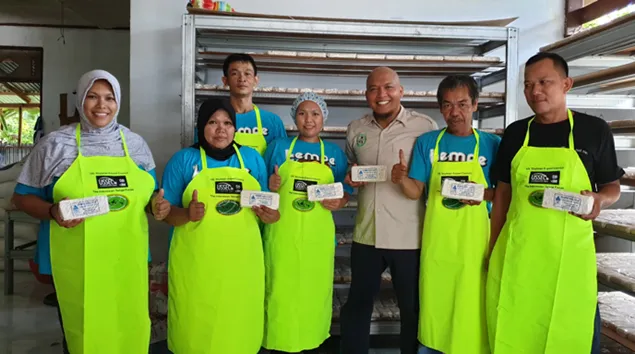
Before Rumah Tempe, the Sulawesi people had no way to process whole soybeans into the traditional fermented soyfood, which naturally restricted tempe consumption compared to neighboring islands. With help from the soy checkoff, Rumah Tempe built a processing facility and helped Sulawesi people develop the skills to process soybeans into tempe.
Rumah Tempe is a checkoff collaboration with the Forum Komunikasi Doa Bangsa, an Indonesian cooperative nonprofit. Founded in 2005, FKDB’s highest priority is developing and growing local tempe production. With the completion of the tempe processing facility on Sulawesi, the checkoff’s multiyear investment has accomplished its task of establishing a pilot plant to increase the consumption of U.S. soy and help create new markets for U.S. soybean farmers.
How an island facility helps consumers and U.S. soybean farmers
Increasing the production and consumption of tempe in Sulawesi offers greater export opportunities for U.S. soybean farmers in new markets in Indonesia. April Hemmes, checkoff farmer-leader from Hampton, Iowa, says increasing the demand for soybeans throughout Asia is a significant win for U.S. soybean farmers.
“It’s an exciting opportunity because this project will lead to new businesses in the region and a transfer of technical knowledge, along with higher-quality and more desirable tempe products for international consumers,” Hemmes said. “All of those factors will drive more imports of U.S. soy.”
Successful development of the Rumah Tempe pilot production facility will create a higher-value product and can serve as a template to increase the tempe consumption across Asia. Launching this checkoff initiative in Sulawesi, gives consumers on the island a new option — an easily accessible, higher-quality product.
Our soy checkoff is dedicated to producing the best possible crop for end users and their customers who depend on soy for the nutritional value it provides each day. Ensuring soy is a readily available food source, through products like tempe, helps increase demand of soy globally. The creation of this facility in Sulawesi is just one way the checkoff is investing in projects that will benefit U.S. soy’s consumers and U.S. soybean farmers for years to come.
The future of soy in Indonesia is bright, said Hemmes.
“This project will create new markets for U.S. soybeans beyond Sulawesi, Java and Indonesia,” she added. “If we can increase the consumption of tempe in Sulawesi, imagine what we can do with this pilot program in other markets globally.”
Related News
Soy’s secret health boost: How soybean meal supports livestock through disease and heat stress
From the farm to the fleet: How U.S. Soy is finding new demand in city garages
Sustainability and the bottom line pull in the same direction