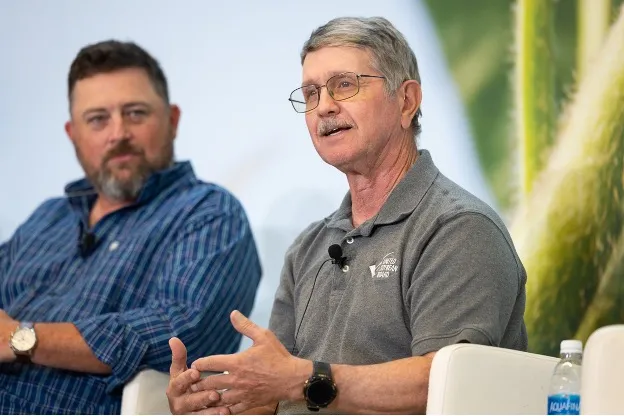
From the grain elevator to Greenbuild: An Ohio farmer sees the Soy Checkoff at work
11.19.2026
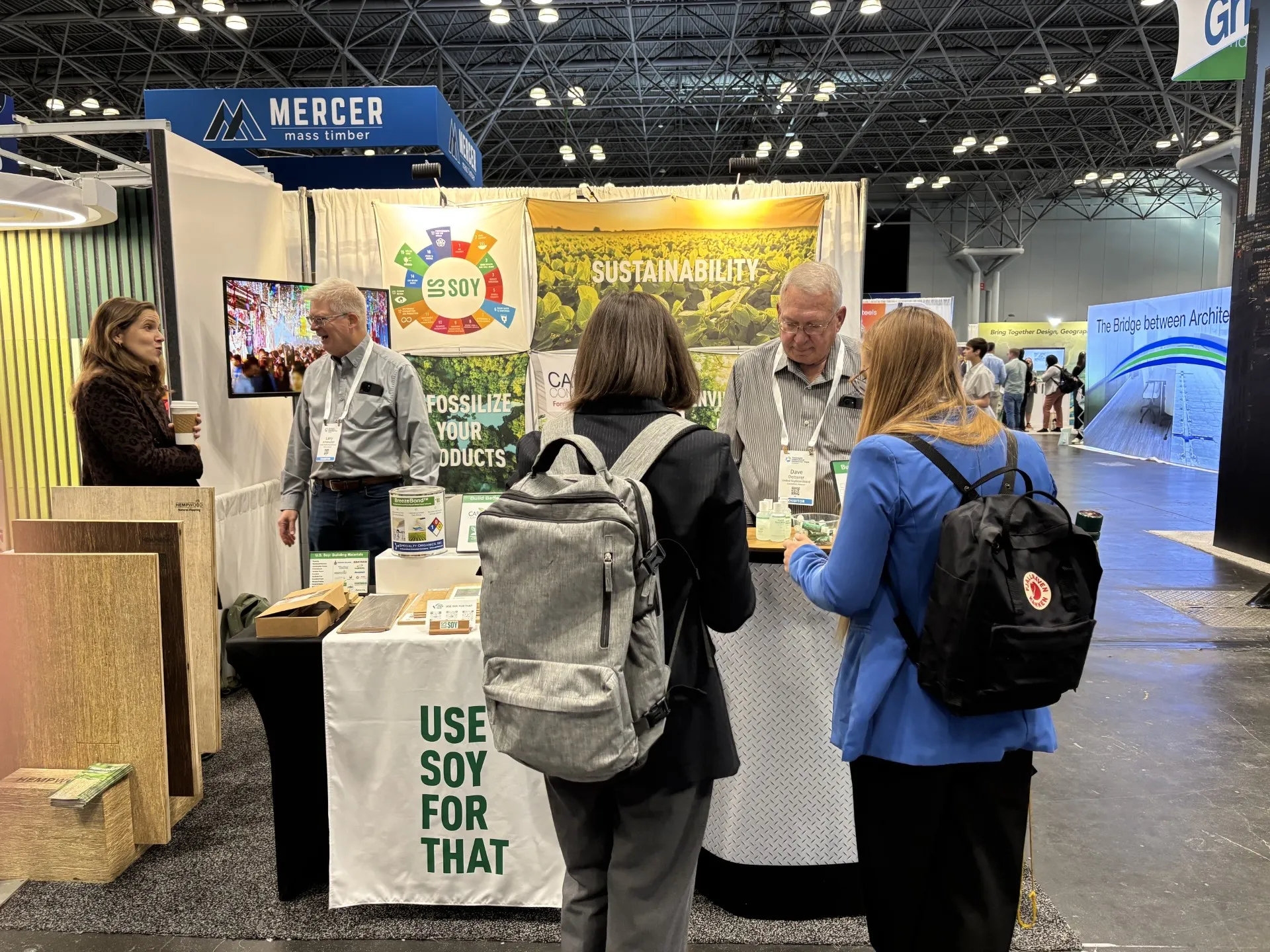
Dotterer, who grows soybeans, corn and wheat, worked the U.S. Soy booth at Greenbuild alongside Omni Tech International, the technical team that represents the United Soybean Board at various industry conferences throughout the year.
“I thought it would be something very interesting, kind of different than what I’m normally around,” Dotterer says. “I thought it was a good opportunity to go see something like that.”
He also went with a question in mind; one he hears often from fellow farmers about the checkoff: “What do you do with all that money?”
Three returns from one booth
Greenbuild is one of the largest conferences in the world for green building materials, says McKenna Losby, Ph.D., USB program director of industrial uses. She says the checkoff’s presence there pays off in three ways. The first is education about soy-based materials that farmers have funded.
“Getting the word out helps other companies adopt the technologies and creates a demand pull,” she says.
The second is scouting. Conversations at the booth surface emerging technologies and potential research partners, which fill the checkoff’s commercialization pipeline.
“Every year, Omni Tech gives us those leads, and when we put out our request for proposals, a lot of those come from Omni Tech interactions at these conferences,” Losby says.
The third is hearing where the industry has a problem that U.S. Soy could solve, such as a chemical that is being phased out and needs a replacement. Those unmet needs point the checkoff toward projects with a buyer already waiting.
Wood adhesives mean meal demand
Visitors to the booth included end users, architects, designers and members of New York City school building committees. Soy-based wood adhesives, used to bind panels together, drew the most attention, Dotterer says, along with stains, solvents, concrete sealers and foams.
Adhesives are by far the largest industrial use for soybean meal, Losby says. Commercial soy-based wood adhesives are already on the market, and checkoff-funded researchers are working to improve water resistance to expand their use.
“Even though there are some commercial products out there, the opportunity for growth is so huge,” she says. “Getting a big commercial wood adhesive partner would be a huge win in the industrial area.”
Even after nine years serving as a Soy Checkoff farmer-leader, Dotterer found products he had not seen before, including spray foam insulation.
What a farmer adds
At the booth, Dotterer fielded questions about growing soybeans while the technical team handled formulations.
“Some of them were kind of surprised. Some of them thought it was unique,” he says of attendees who learned they were talking with a farmer. “Then they’d have a few questions about growing soybeans and how it got to be in a product like that.”
Losby says that exchange is hard to replicate.
“Having a farmer in the booth is such a breath of fresh air for people, because they can really see that farmer experience,” she says. “They can answer questions that a technical person wouldn’t know the answer to and then put a face with the idea of soy.”
Tracking the return
After each show, Omni Tech reports back on booth traffic, the conversations it had and the needs it heard. The checkoff also tracks how many of those leads become checkoff-funded projects, Losby says, to determine which shows are worth the investment.
Dotterer came home with his own measure, and a better answer for the farmers who ask where their checkoff dollars go.
“Before I was ever on the board, I would have never imagined the things that go on with research and soybean use,” he says. “When you’re a farmer, you pretty much think feed, oil for consumer use, or maybe biodiesel.”
He would like more farmers to see that demand firsthand.
“It would be nice if farmers who are not on the board would attend these kinds of things, simply for the fact that they might understand a little better what their checkoff is used for,” Dotterer says. “I thought we had an extreme amount of interest. A lot of people stopped and talked. I thought it was a very good show for us.”
Related News
CEOs celebrate soy on national webinar
Farmers as Ambassadors: Building Trust in U.S. Soy Around the World
This National Pork Month, winter feeding decisions can help producers beat the summer dip