Sustainability and the bottom line pull in the same direction
Three USB farmer-leaders on why conservation and profitability aren’t competing priorities.
06.05.2026
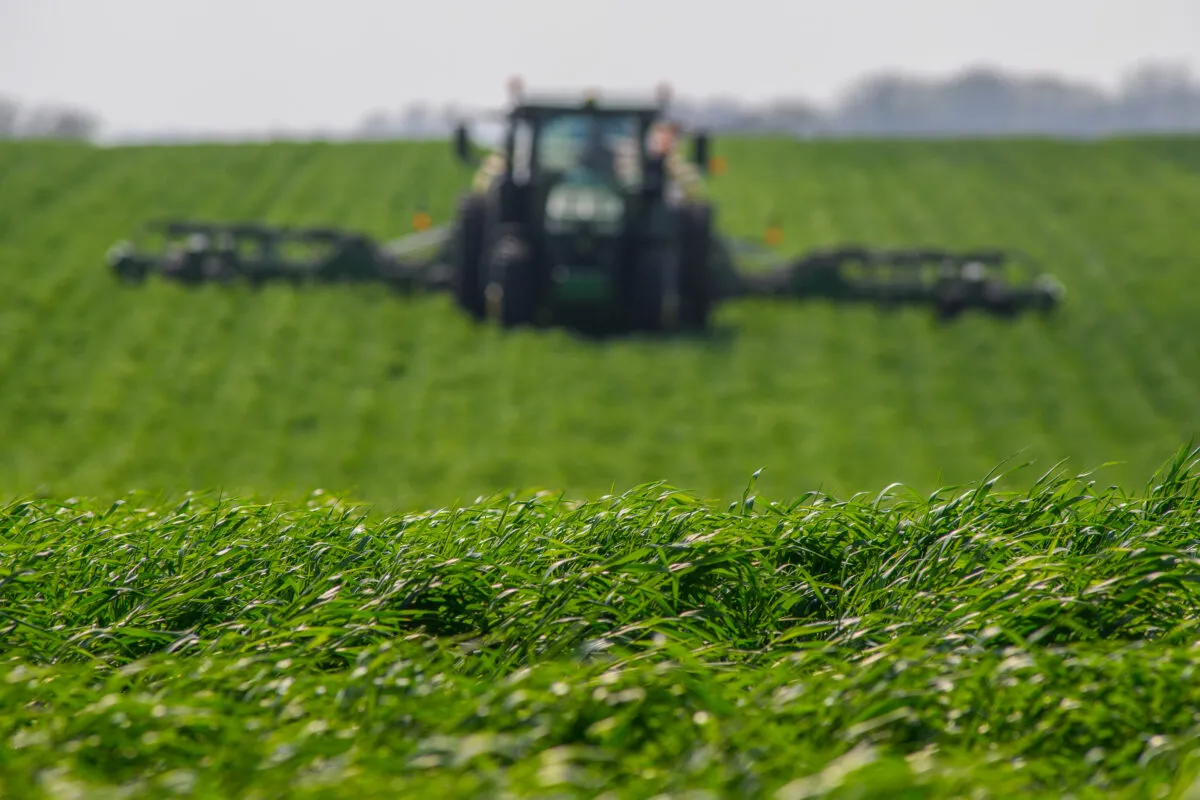
Heading into 2026 with tight margins, high input costs and a planting season that swung from early-April warm to a rain-soaked May, the question isn’t whether farmers are paying attention to sustainability. It’s whether the math still works.
For three United Soybean Board directors who joined a recent Agri-Pulse webinar, the answer is clear: economic and environmental sustainability aren’t competing priorities. They’re the same priority — and the proof points are stacking up.
A long view of the land
“We can absolutely be environmentally sustainable and also be productive and economically sustainable,” said Laurie Isley, who chairs USB’s Sustainable Production Committee and farms soybeans and corn in southeastern Michigan with her husband and son. Her family has farmed the area for 150 years. “We look at sustainability as being a long-term plan, not what’s the best way to get the most out of this crop this one year.”
Isley runs no-till soybeans and strip-till corn. She also points farmers to Farmers for Soil Health — led by the Soy Checkoff, Pork Checkoff and the National Corn Growers Association — that pays $35 per acre for cover crops on up to 2,000 acres. New this year: no look-back, meaning farmers qualify whether they’ve planted cover crops for the first time or 20th time.
“The soil is the lifeblood for the farmer,” Isley said. “Conservation practices such as cover crops and no-till really help enhance the viability of the soil.”
Farmer dollars, farmer questions
Charles Atkinson has been no-tilling in southeast Kansas for 30 years on a multi-generational farm that rotates soybeans, corn, wheat and cover crops across the same ground, alongside a cow-calf operation. Even with urea up $100 a ton between the start and finish of planting, his system kept fuel use and field passes down.
“The checkoff allows us to invest our own dollars into our own product,” Atkinson said. “We’re not having to ask for research dollars anywhere.” He pointed farmers to checkoff-funded resources including the Crop Production Network, the GROW weed management toolbox, the SCN Coalition and Science for Success.
He’s also a realist about field conditions. “It seems like we have Plan A, B, C, D, E and F,” he said. “All the tools we have, we have to be ready to pull the trigger at any given time.”
A market that rewards the work
For Matthew Chapman, a fourth-year USB director farming with his brother in East Central Indiana, the clearest payoff has come from high oleic soybeans. Checkoff investment in high oleic genetics has returned more than $400 million in premiums to soybean farmers, with 2025 premiums ranging from $0.75 to $1.25 per bushel.1
Chapman started with 20% of his acres in high oleic. He’s now at 100%. His 2026 crop is headed to dairy feed — a market USB projects will absorb roughly half of all high oleic production by 2027 — and new industrial uses keep opening up, from fire-resistant hydraulic oil to bio-based asphalt polymers.
“Move towards that goal of leaving the farm better than you found it,” Chapman said.
Ready to put cover crops to work?
Farmers for Soil Health is enrolling now — $35 per acre for cover crops on up to 2,000 acres, with a local technical advisor to help you with seed selection, establishment and termination. Contracts are one year and renew annually. Open to farmers in 20 states. Enroll at farmersforsoilhealth.com →
References
Related News
Soy’s secret health boost: How soybean meal supports livestock through disease and heat stress

From the farm to the fleet: How U.S. Soy is finding new demand in city garages
The infrastructure your soybeans depend on: USB’s push to modernize the supply chain